NEXT SESSION · ON CALENDAR
STATUS · ON SCHEDULE
The Griot
in the Garage.
I asked AI to help me get my health back.
It started by showing me what I didn't want to see.
The Report Was
Fourteen Months Old.
Before I actually read it. Not skimmed — read.
In May 2026 I fed every medical record I could find into a health system I built with Claude. Bloodwork. Ambulatory summaries. Screening history. All of it, into a set of databases. Then I asked one question: what should I be worried about?
The answer came back in two lists.
THYROID (TSH) ....... BELOW RANGE — flagged, untreated
TRIGLYCERIDES ....... ABOVE RANGE — lifestyle-driven
$ griot health --never-tested
PSA ................. NO RECORD — age 46. priority.
FULL LIVER PANEL .... NO RECORD
CBC ................. NO RECORD
BLOOD PRESSURE ...... NO BASELINE
The first list was two quiet numbers drifting in the wrong direction while I was busy building everyone else's systems. The second list was worse, because it was a list of silence. No prostate screening — ever — at forty-six, as a Black man, for whom that test is not optional trivia but the number one gap on the board.
My Calendar Defended
Everyone Except the Patient.
I run a systems firm. My days were engineered — client calls, builds, proposals, school runs at seven, meetings from nine. Takeout instead of cooking, because an hour saved is an hour billed.
Three years ago I was a CrossFitter. By this May, my honest baseline read like a stranger's chart: barely able to run a mile. Ten-minute-plus pace. Strength near zero. Weekly activity down to a couple of one-mile walks.
So I stopped treating my health like a mood and started treating it like an engagement. Map first. Then build. Then evolve.
First, Build
the Record.
The map became a hub in Notion: five databases — lab results, a fitness log, body metrics, a habits tracker, screenings and appointments. Every report I had been avoiding became a row I could query.
Then Claude became the coach. I handed it a stack of eight fitness magazines and it came back with a full exercise library — thirty-plus movements with form cues, the science on rest intervals, heart-rate targets tuned to my age, and a Phase 1 plan built for a forty-six-year-old rebuilding from zero, not the twenty-eight-year-old the magazines were written for.
And I put the targets on the record, where they could embarrass me:
The Garage Got the Same
Treatment as the Data.
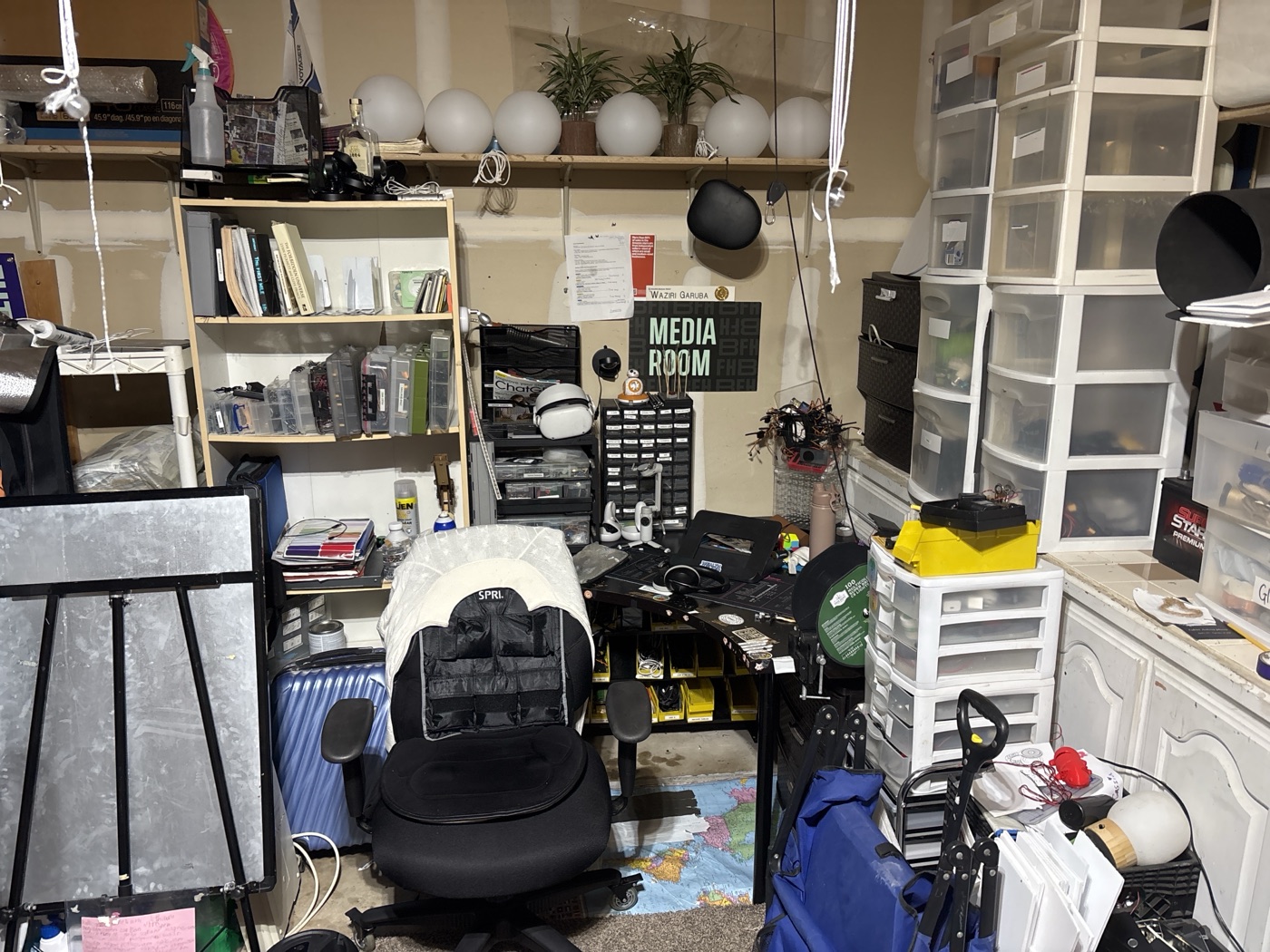
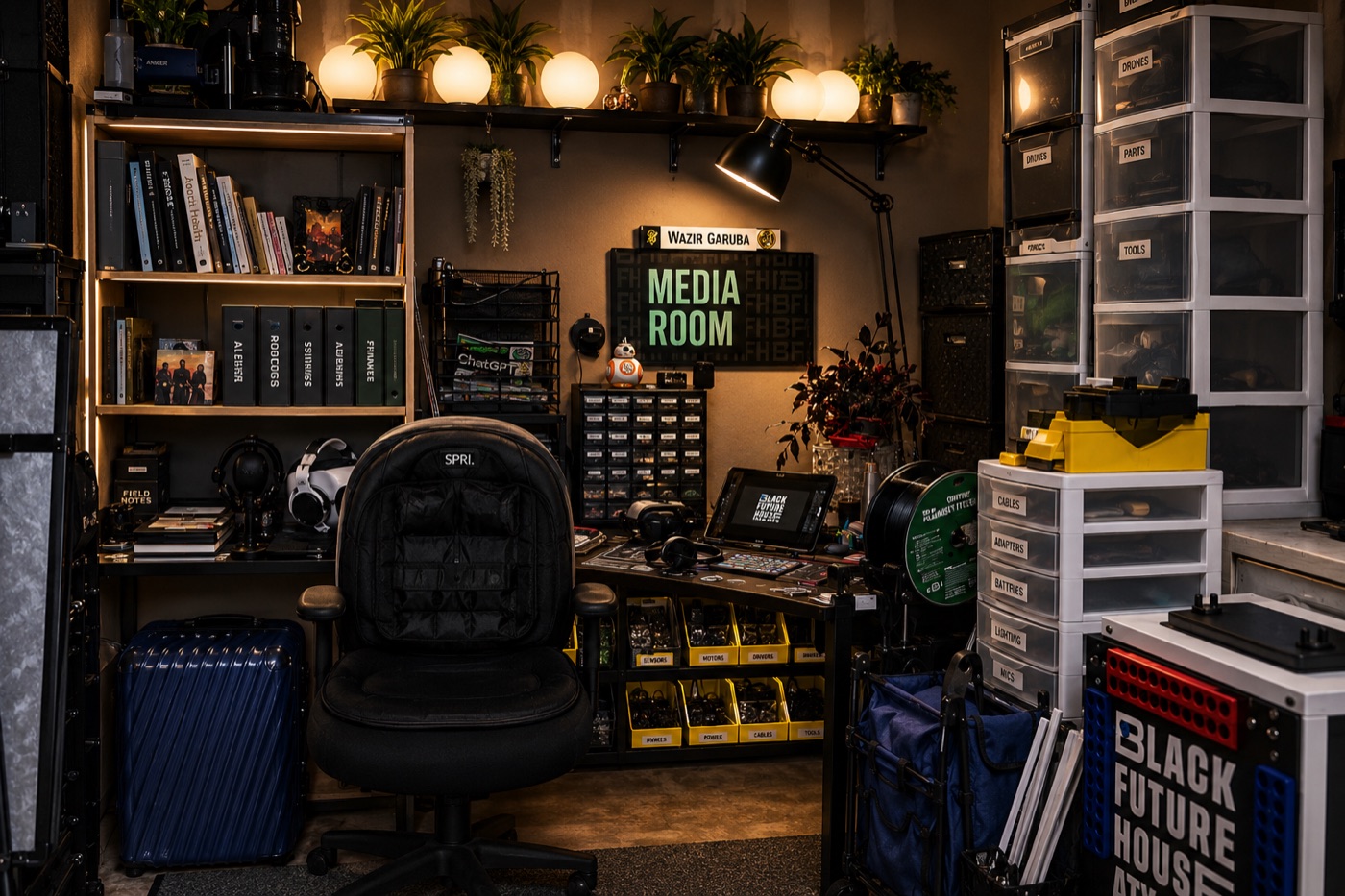
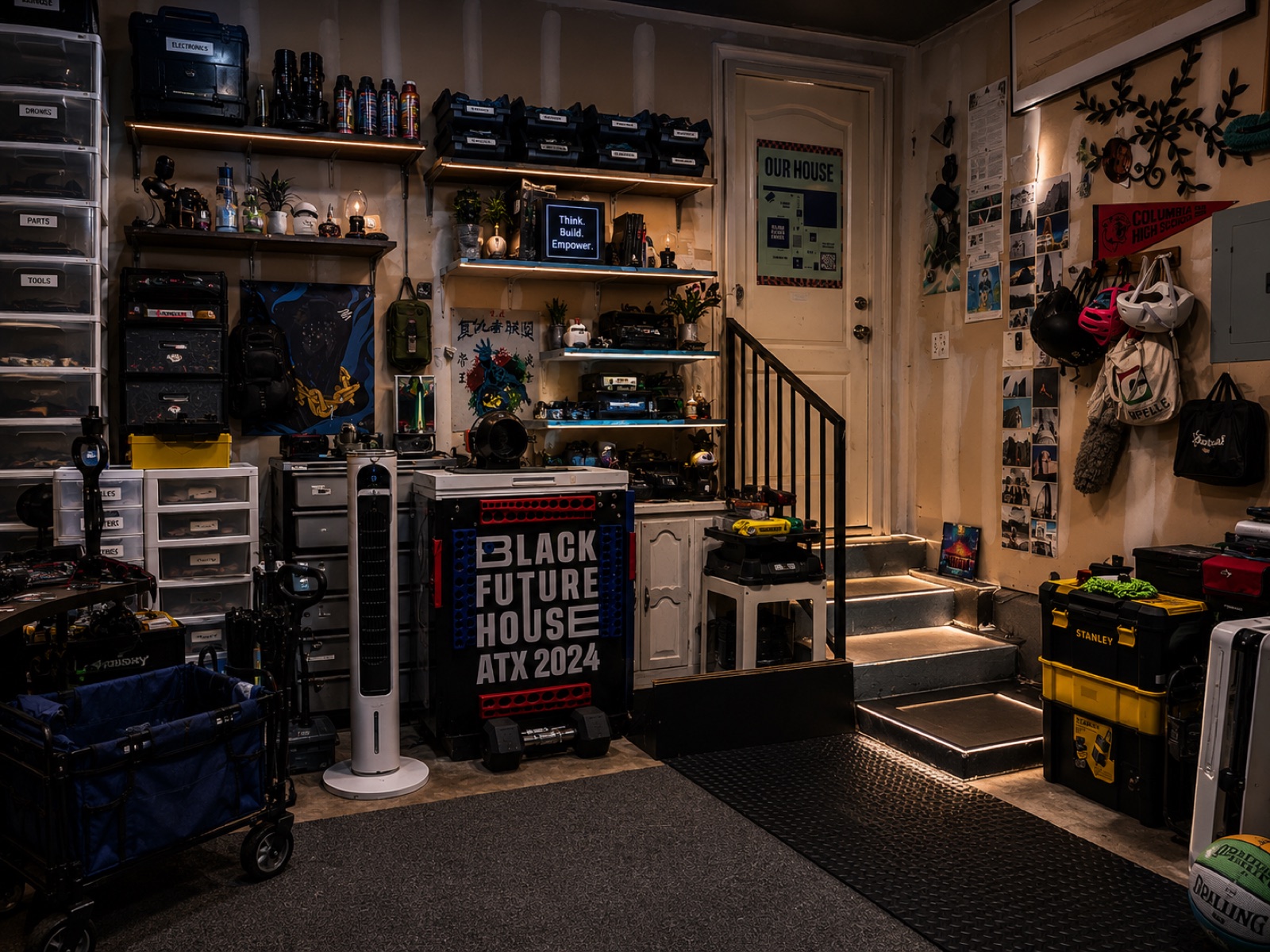
We cleared it out and made it station one. Modest. Sufficient.
- → Electronic jump rope counts what I actually do
- → Push-up tool rotating grips
- → Dumbbells 15 lb + 25 lb
- → Weighted vest 20 lb · non-negotiable
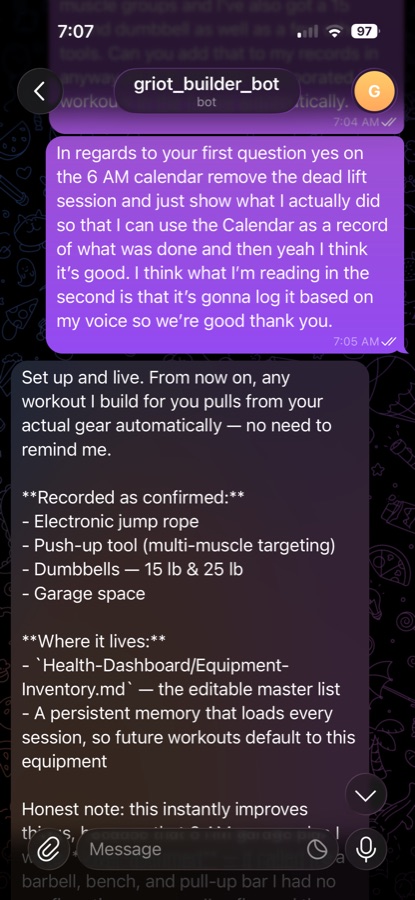
The first garage workout Claude wrote for me assumed equipment I don't own — a barbell here, a bench there. So we wrote the garage an equipment inventory: a file that lists exactly what exists in each training location, with one line in capital letters — do not assume.
Now every workout is designed for the room it will actually happen in. The July program literally reads "Default = garage," with gym alternates in brackets for the days I train at my ten-dollar-a-month gym.
The Log Is Honest
in a Way I Am Not.
The scheduling constraints went in next. School-year mornings are impossible — drop-off at seven, meetings at nine — so Tuesday, Wednesday, and Thursday afternoons plus weekends are protected training windows. The system scans the calendar, finds the open pockets, and books the sessions. Every workout in the July program is tied to an actual Google Calendar event. When life moves, I tell it on the fly and the plan moves with me.
But the piece that matters most is the log.
2026-07-11 (Sat) — Rest day (intentional). Deliberate deload, not a miss. Moved to Sun.
2026-07-13 (Mon) — ✗ Missed. No workout.
Both lines are still there. The system knows the difference between discipline and excuse, and it refuses to blur them for my comfort.
It also catches what I would rationalize away:
-
01Lower back flared during lungesLogged mid-session. Next lower-body day was automatically deloaded to bodyweight — on purpose, on the record.
-
02Left side kept coming up weaker than the rightThe observation didn't evaporate. It turned into a mobility and glute-activation routine that now shows up on the calendar like any other appointment.
-
03Two recovery sessions skipped in one weekMarked ✗ on the calendar. Recovery is programmed now — evening yoga and hip mobility have their own files.
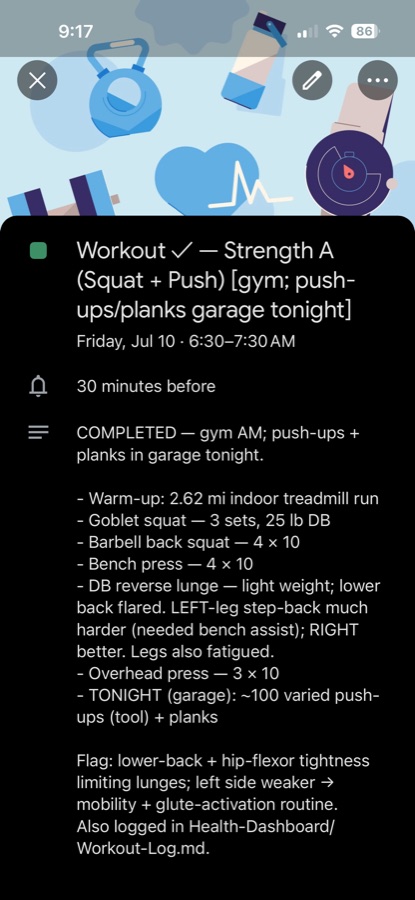
Creeping issues surface in the data long before they surface as injuries. That is the entire point of keeping a record.
The Part
I Didn't Expect.
The hardest problem in fitness after forty isn't motivation. It's time — and the same AI that watches my health had already been buying my time back for a year.
The proposals, the dashboards, the follow-ups that used to eat my evenings now run as processes. And they don't stop when I leave the house. From the gym floor, between sets, I can send an instruction from my phone — over Telegram or the Claude app — to Claude Code running on my Mac at home, and a build advances while I'm under a bar.
I have shipped client work from a treadmill warm-up.
For the first time in years, the gym doesn't compete with the business. That's where the relief lives. Not in the workouts — in the fact that going no longer costs me anything I can't afford.
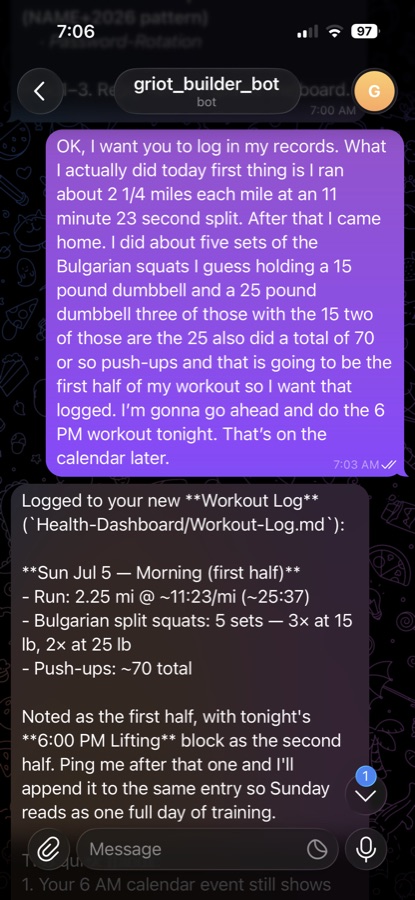
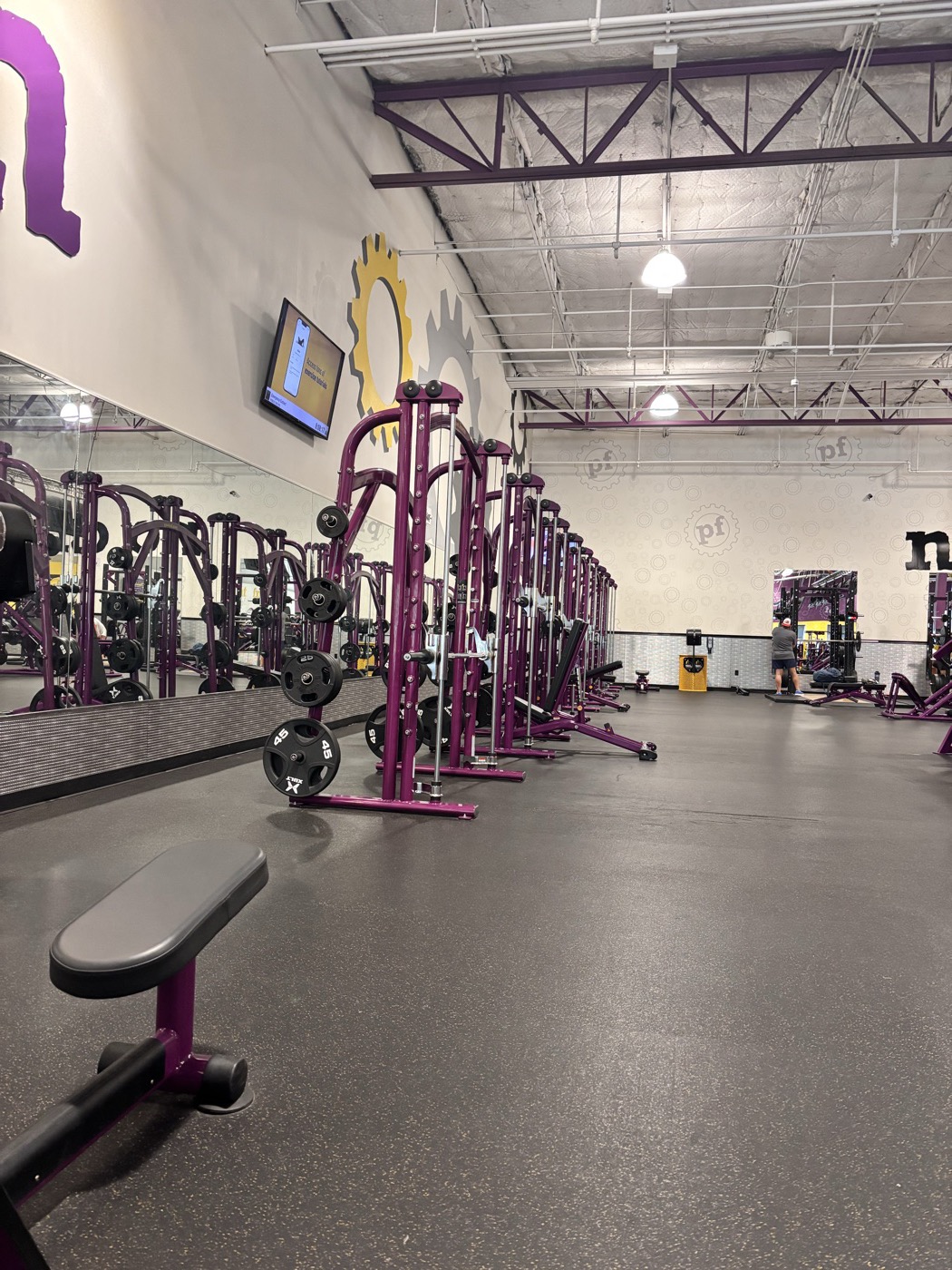
Eight weeks ago my record said: barely able to run a mile. Last Tuesday's entry says the warm-up — the warm-up — was a 2.75-mile run, followed by Romanian deadlifts, rows, and curls, with core work finished at home in the garage that evening.
This Is Why
It's Called GRIOT.
In West Africa, the griot was the keeper of the record — births, debts, harvests, victories, held in living memory across generations. A village that lost its griot lost its history. What didn't get recorded got lost.
You are already keeping a record. Your arteries keep it. Your bloodwork keeps it. Your calendar keeps it, in the shape of everything it never made room for. The only question is whether the record has a reader — or whether you'll meet it all at once, in a doctor's office, years from now, as a stranger's chart with your name on it.
What gets recorded gets watched. What gets watched gets better.
← Back to Wazirigaruba.com