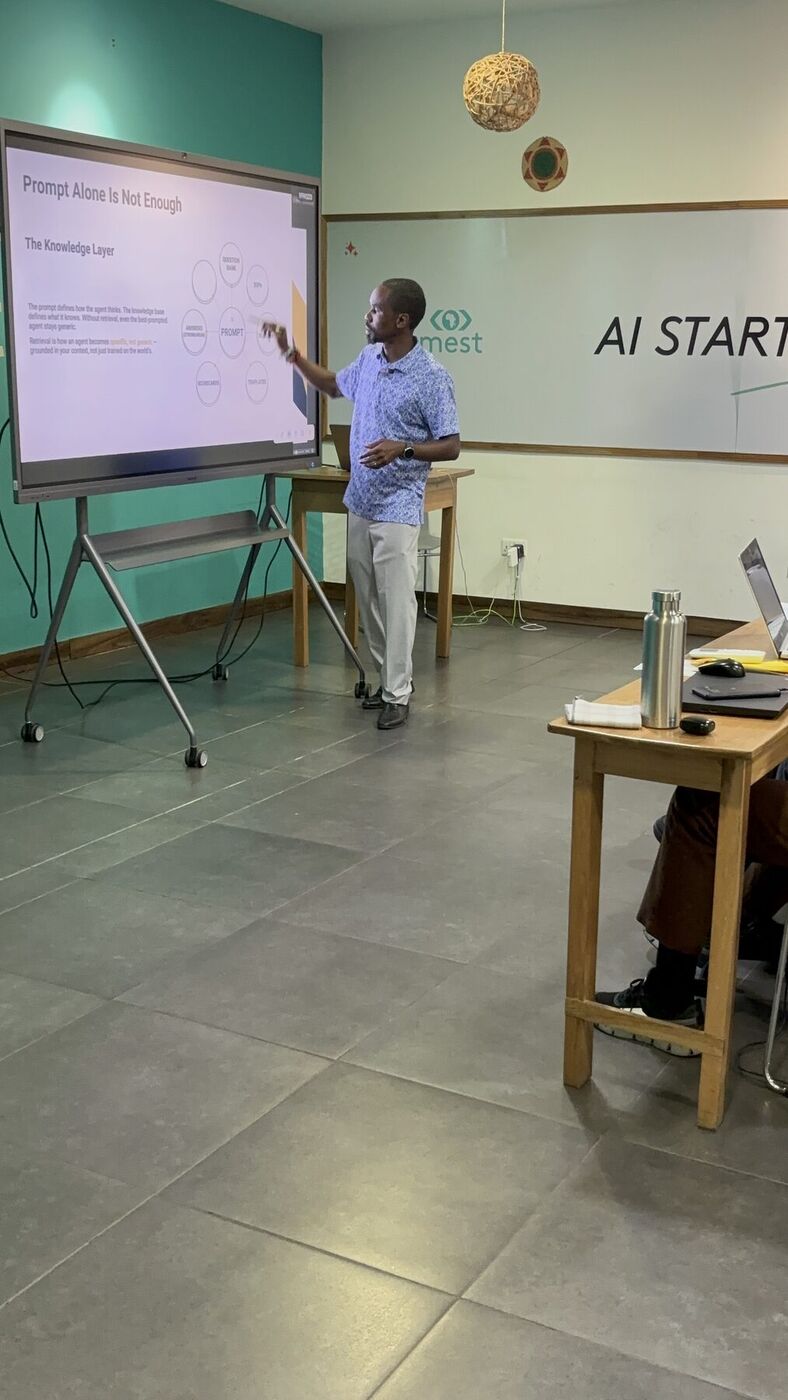
The founders went up one team at a time and talked to the agent.
They weren’t pitching it on anything. They were simply briefing it on their goals, their objectives, the tech stack they were building with, in the same way they would to a new hire on day one. Claude was the brain and ElevenLabs was the voice, and behind both sat a knowledge base we had built together for the MEST class.
The agent listened. Then it analyzed what it had heard and gave the founders feedback on it. The feedback was insightful enough that they stopped and looked at each other. It had caught things they hadn’t said out loud yet.
Then it kept going. Working from the context they had just given it, it explained what it could do for them: which parts of the work it would pick up, and why each one mattered. It was like having a smart consultant tell you what you could do better, and then going on to break down the 20% of work it would carry alongside you, so you could focus on the rest.
With receipts.
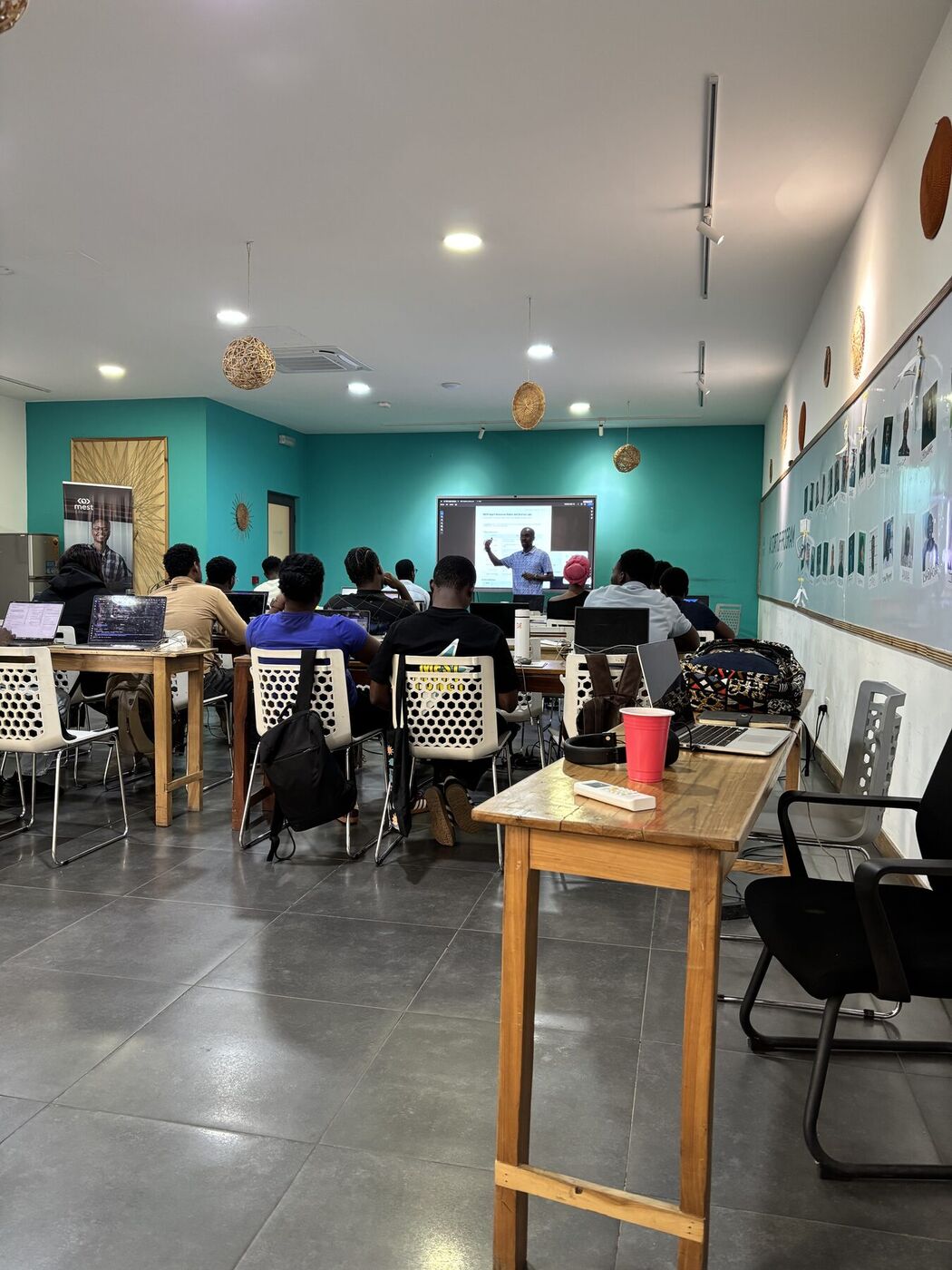
Two teams went through it live. Twenty-nine founders from seven countries had spent days listening to me talk about agents. Now they were watching one work for and with them.
Then the room started talking. Laptops opened. People leaned over to the person next to them. The chatter that tells an educator that something has landed came up from every corner at once.
That was the moment I knew I’d hit my mark.
What they saw was not a clever tool. It was their own thinking, captured.
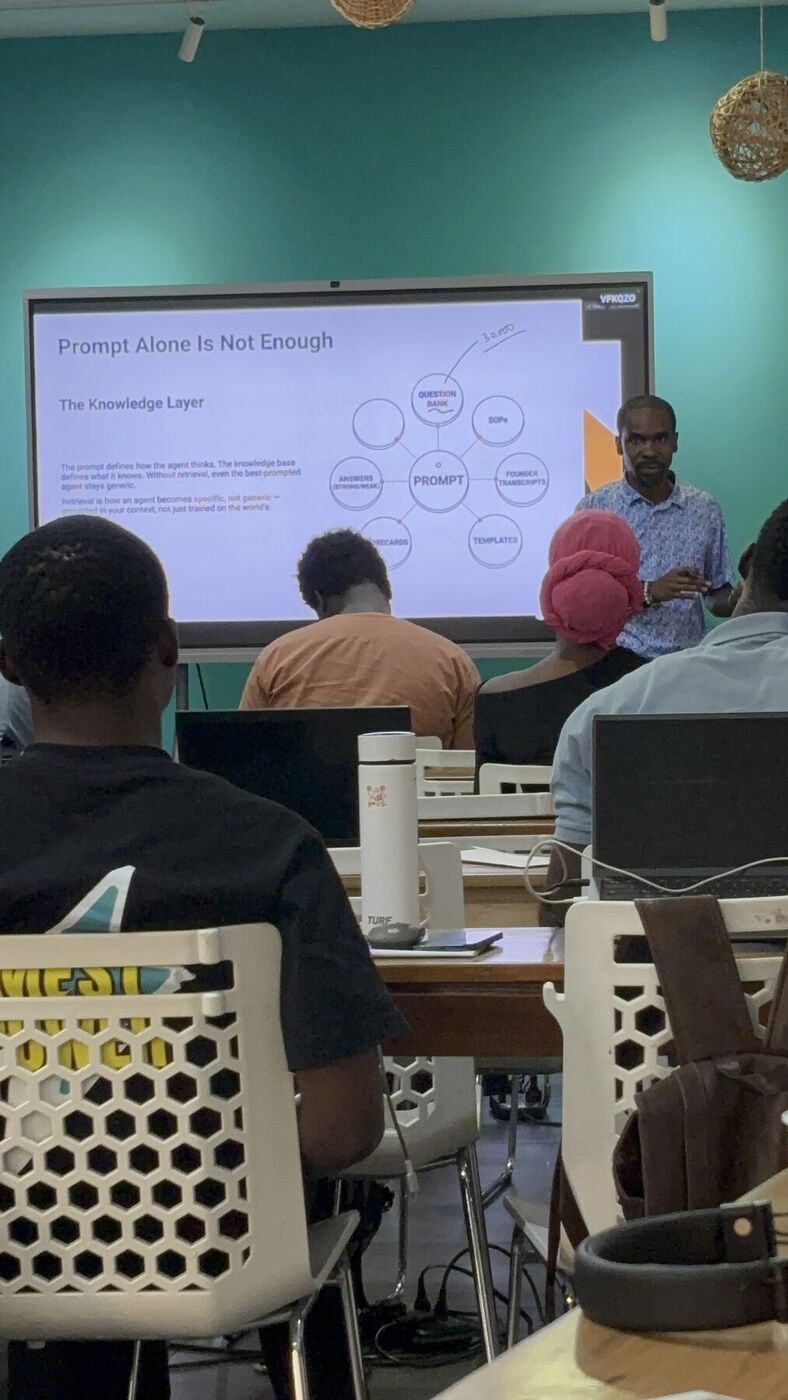
The deck I taught from that morning was called Build the Agent, Not the Hype, and its first claim was simple: an agent is not a tool choice, it’s a system design problem. Before you pick a stack, you decide what job the agent owns, what decisions it improves, what it must never do, and what it needs to know.
Essentially, you Map.
Every one of those answers comes out of the founder’s head. The prompt is how the agent thinks. The knowledge base is what it knows. Both are made of the same raw material: the founder explaining, out loud and in detail, how they actually make decisions.
That is the part that changed the looks on their faces. These were technical founders. Many of them wrote code for a living. They had assumed building an agent was an engineering problem they would get to later. What they watched was founders talking an agent into being useful, in real time.
The build was the conversation.
There is a conversation in American boardrooms right now about whether AI adoption is moving fast enough. Consultants bill six figures for readiness assessments. Committees form to evaluate other committees.
That world has a quiet incentive to keep agents mysterious. If building one requires a specialist, the specialist sits between the people who know the problem and the system that could solve it, and the specialist gets paid either way.
The room in Accra didn’t have time for that. These founders were building agricultural tools for farmers who have never used a spreadsheet, triage for communities hours from a doctor, and financial products for economies where mobile money moves faster than any bank. When the person closest to the problem can describe their judgment to an agent and watch it hold, the advantage moves back to them. That shift is what the chatter was about.
I told them something that day I keep coming back to.
In 2001, you did not need email to have a job. Plenty of people built whole careers without it. Today, try getting hired without one. It went from optional to assumed in less than a working generation, and nobody announced the day it happened.
Agents are on the same road. Soon they won’t be a novelty. They will be how we find the signal and block the noise, how a founder with a team of three keeps up with a team of thirty. The founders in that room will not be asking whether to use them. They will be asking why anyone ever worked without one.
In West African tradition, the griot keeps the knowledge of the community and passes it forward when it’s needed. The griot doesn’t hoard. Every story told makes a new storyteller. That’s what a good session does, and it’s what a good agent does too: it takes what one person knows and makes it available at the moment someone else needs it.
My parting advice to the class was to use AI defensively. Don’t use it to replace yourself. Use it to multiply yourself: as a thought partner, as a way to delegate, as a way to buy back your time.
Months later, MEST sent me the founders’ feedback on the sessions. Out of 100:
Emily Fiagbedzi, MEST’s AI Startup Program Director, told me these were “some of the highest scores of our facilitators.”
I’m proud of those numbers, but they aren’t the point. The point is what happened in the room: twenty-nine of the sharpest technical founders I have met realized that the most valuable thing they bring to an agent is the way they think, and that they can teach it to a machine by talking.
If you run a program, a cohort, or a room full of builders, the question is what your people walk out able to do on Monday. If you’re a founder, the question is whether you keep carrying every decision yourself, or learn to break the work down until something else can carry it with you.
I’ve walked this path before. I’d be glad to walk it with you.
References available through MEST.
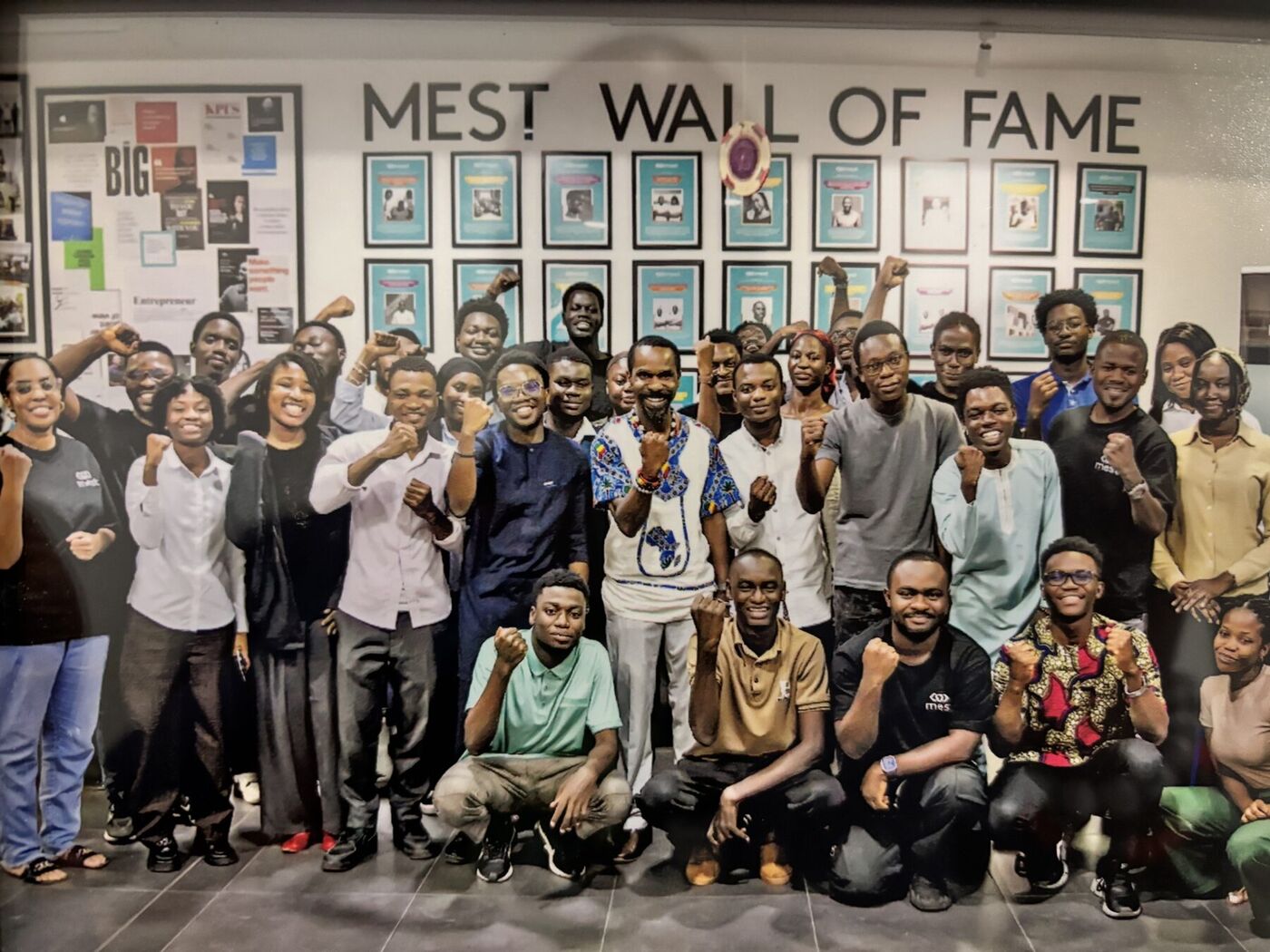
I spent two weeks in that room. None of it happens without the people who built it. MEST, the Meltwater Entrepreneurial School of Technology, has spent years finding Africa’s most promising tech founders and backing them with training, seed funding and incubation. This year’s class came from Benin, Ghana, Ivory Coast, Nigeria, Senegal, Sierra Leone and Togo.
In March, Akua, a fellow Columbia Business School alum, and I brought Columbia alumni into the room for an evening with the founders, and the conversations that started there are still going. If you’re reading this, you can do the same:
Mentor or advise. If you’ve built, scaled, funded or sold a company, these founders want your hard questions.
Partner or sponsor. Tools, credits and access go further in that room than almost anywhere I’ve taught.
Send a founder. Applications for the next MEST AI Startup Program cohort aren’t open yet. If you know a founder who belongs in that room, reach out and I’ll put you in touch with Akua.
Learn more at meltwater.org, or reach out and I’ll make the introduction myself.
Where else you’ll find my work: wazirigaruba.com · harlemlabs.com · The Operator’s Map · AI Think Trust · Automatic Wins
— Waz