FOUNDERS · AGES 9–10
LEDGER · $0 · ALL REAL
Creators,
Not Consumers.
Three kids. Three real companies.
And the decision every family is about to make without noticing.
My Son Was
Shopping for Domains.
There's a screenshot on my desktop from June that I keep coming back to. It's a domain-name search. gamemania.com — unavailable. gamemania.dev — $9.99. Rows and rows of prices and extensions, compared and considered.
My son ran that search. He was nine.
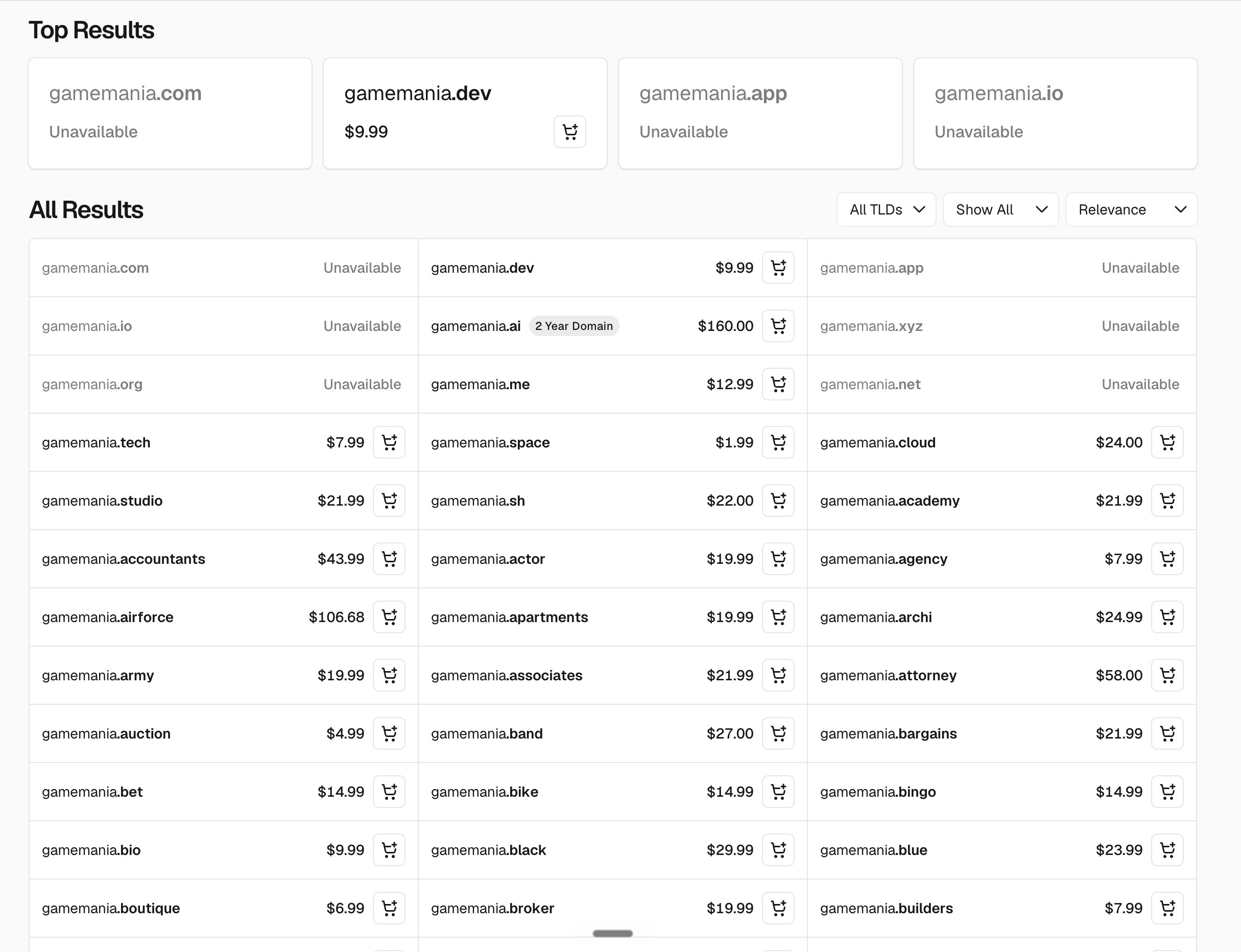
He wasn't shopping for something to watch. He was pricing real estate for a business he runs. That screenshot is what screen time looks like at our house now — and getting there required us to stop fighting the wrong war.
The War
of Minutes.
Every parent I know is fighting screens, and almost all of us fight the same way: minutes. Twenty more, thirty less, timers, tokens, negotiations at the dinner table. Julia and I fought that war too, and we kept losing — because the problem was never really the quantity of the screen time. It was the direction.
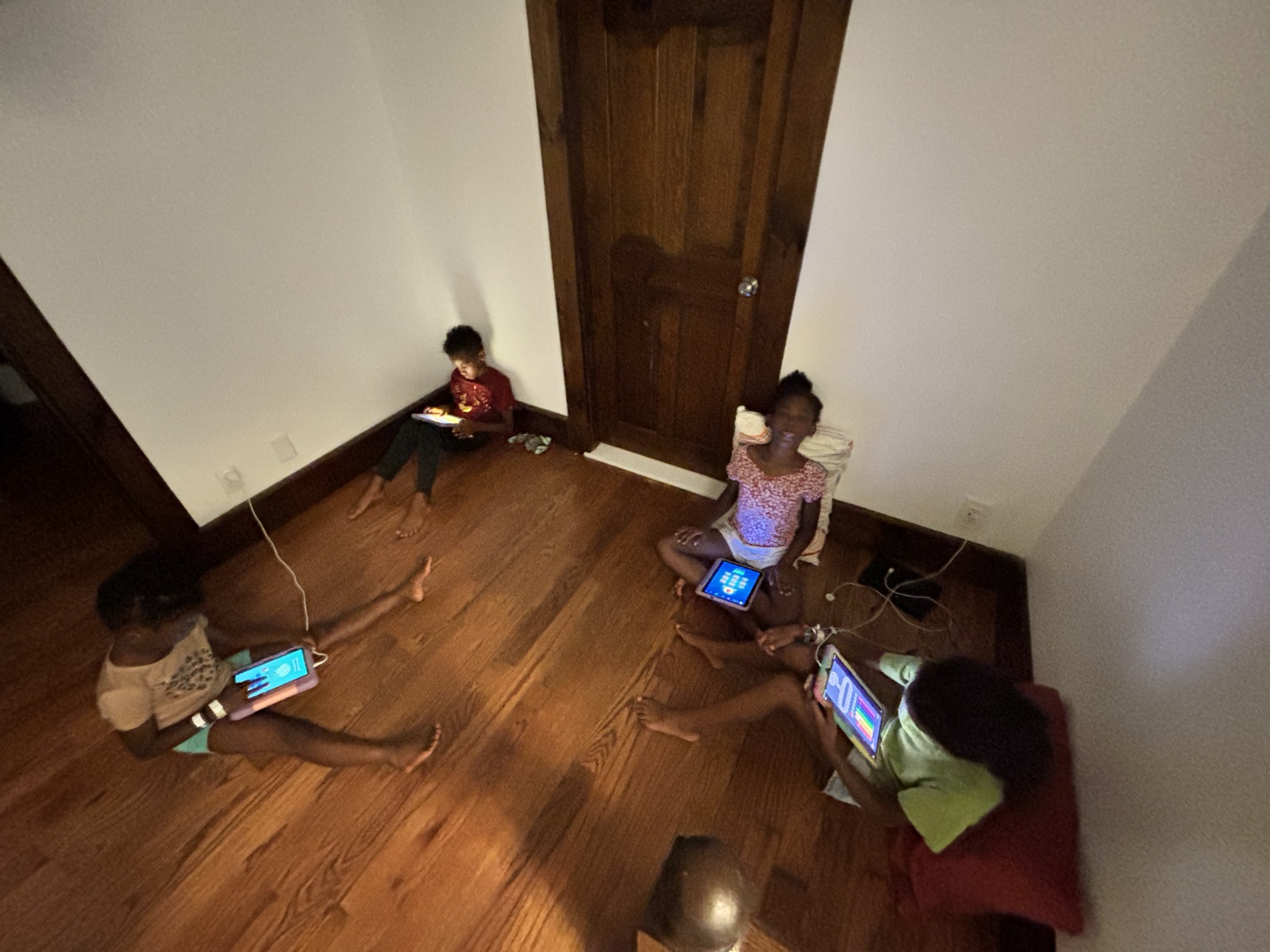
A screen has two sides. One side consumes; the other side creates. Every feed your child opens was engineered by some of the most talented people of this generation, whose entire job is to lengthen the session. The content is bottomless by design. Consumption is the default not because kids are weak, but because the default is profitable.
Three Kids.
Three Companies.
So this summer, each of our three kids got a company. Not a lemonade-stand metaphor — deployed platforms, live on the internet, with their names on the door.
Makeda runs Ravenquill Press. Four shelves: short stories, manga and comics, picture books, and a sealed Mystery Games imprint that unlocks when her first case ships. The shelves launched empty, and that emptiness is the point — nothing appears on a shelf until it has been drafted, edited, and actually finished. That's not a restriction; that's an editorial pipeline, the same one every working writer lives inside.
We've already play-tested her mystery formula at the dinner table — a case where the suspect list included her own siblings, everyone was cleared, and the culprits turned out to be two kittens named Stars and Stripes. Fair-play clues planted in act one, resolved in act three. She's ten, and she's learning story structure by running a whodunit like a boardroom.
Cyrus runs Nano Games — scanlines, neon glow, like the machines I grew up feeding quarters into. His first title, Aquatic Survival, stars Aqua, a tuxedo water turtle. His second, Elemental Trials, is already live. The arcade has a global leaderboard backed by a real Postgres database — when his friends play, their scores persist, worldwide, exactly like the games he loves. He's the one who ran the domain search.
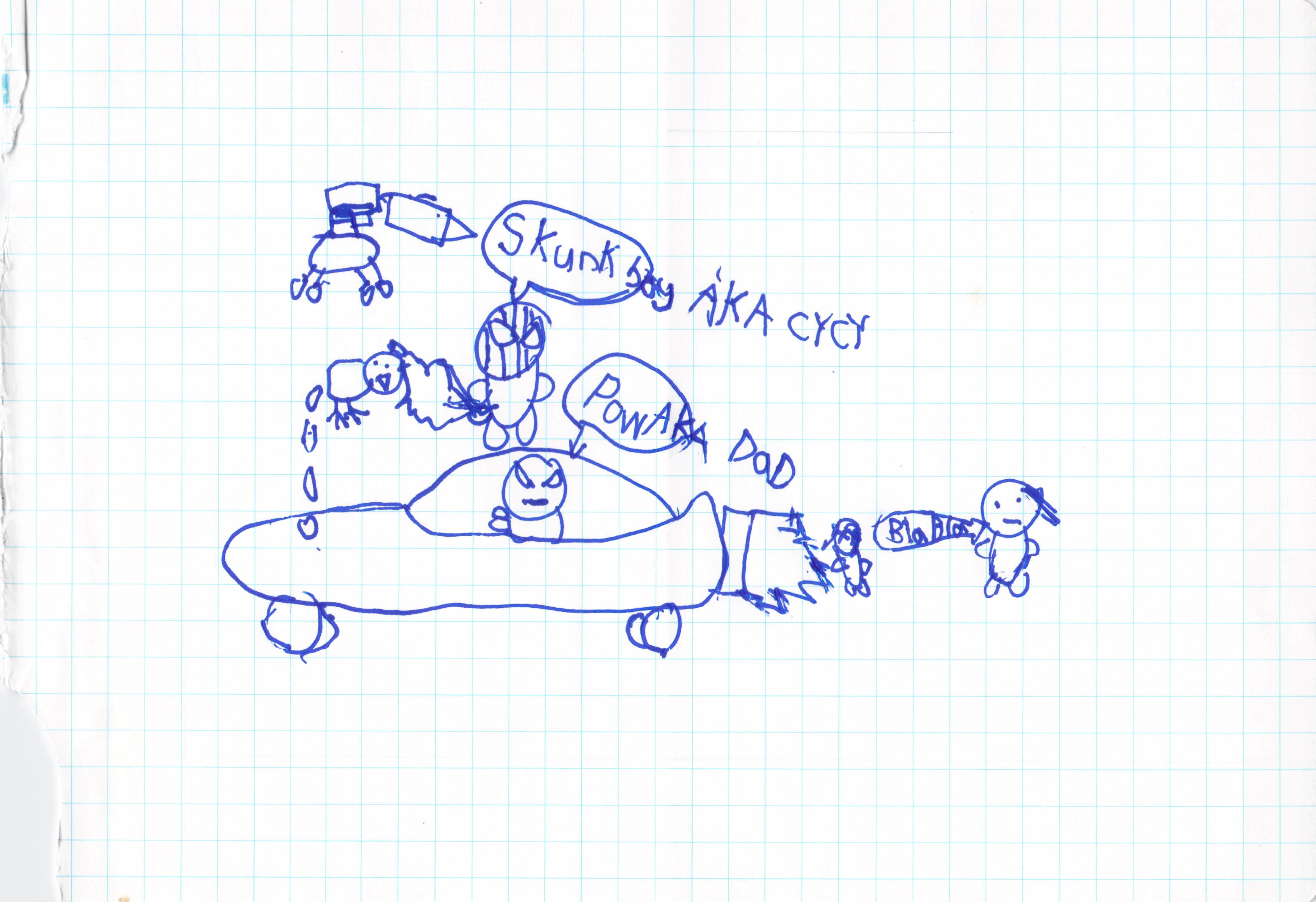
EVERY STUDIO STARTS WITH CONCEPT ART
Cassia — Cyrus's twin — runs Cassia & Co., an executive services firm. Hers might be my favorite, because the services are not aspirational; she already performs them. Fridge and nutrition management: she cleans it out, checks expiration dates, tracks whether I've had my probiotics, builds the grocery list. Concierge service: my shirts get pressed better than I press them. The site has a booking page, a reviews page that stays empty until a real client leaves a real review, and a public ledger tracking her progress toward a goal she set herself — one thousand dollars by the end of summer.
The ledger launched at zero dollars. On purpose. When we looked at payments, Stripe told us account holders must be eighteen — so instead of faking it, the ledger is manual, and every dollar that ever appears on it will be real. "Real Payments" is written into her guidebook as a quest she'll earn her way to.
That's the other piece: each kid received a printed, signed guidebook — a CEO's guidebook, a Founder's guidebook, an Executive's guidebook — teal and gold, with five Money Quests, a founding agreement, and a certificate.
The Quieter Machine:
a Home Faculty.
The companies are the headline, but the quieter machine matters just as much. Our kids get an excellent education at Valor — classical, rigorous, the kind of schooling we chose deliberately. What Julia and I refused to do was outsource everything between report cards. So the same AI that builds my client systems now runs a small home faculty.
When Makeda hit division with remainders, we didn't buy a workbook — we generated one: a guide written to her, eight practice sets, and an answer key for parents, so we could check work at the kitchen table without faking confidence.
- → Division with Remainders — A Guide for You 8 practice sets + parent key
- → Multiplication grid, 1×1 to 20×20 lives on the fridge
- → 4th-grade summer curriculum package history & geography workbook included
- → Math Test for Cassia · Cyrus Math Test 2 named, and pitched to each kid
- → Book quizzes — Narnia, Harry Potter reusable prompt · any novel, minutes
- → Kids' finance course session outlines + homework
None of this replaces their school. It does something school can't: it lets two parents see, week by week, what stuck and what needs another pass — and respond the same day.
And it's growing past our walls. With four other dads, we're building Tribe Dev Quest — twelve kids across five families, where a twenty-minute learning quest earns forty-five minutes of screen credit, across nine subjects from spelling to entrepreneurship. The kids earn XP. The parents get the signal.
The Workshop
Used to Cost a Fortune.
For most of human history, children learned by making things next to their parents — the forge, the market stall, the shop ledger, the griot's apprentice memorizing the village's history line by line. Learning and producing were the same act, done side by side.
Industrial schooling separated learning from making. The feed finished the job, turning childhood itself into a consumption category — the first generation raised as an audience.
What AI changes is the cost of the workshop. A publishing house used to require a company. An arcade with a global leaderboard used to require a studio. Now a father with Claude Code can stand one up in an evening.
But notice what AI did not do. It did not write Makeda's stories. It did not design Cyrus's next game. It did not iron a single shirt. It built the shelves — and what goes on them is the child's work, and it can't be faked, because the shelves are public and launched empty.
The Feed,
or the Workshop.
Every family is going to make a decision about AI and their children in the next few years, and most will make it without noticing: the feed, or the workshop. A screen that harvests their attention, or a screen with their name on the door.
Ours is made. The shelves at Ravenquill are waiting for their first published story — Makeda is drafting. The arcade has two games live and a Coming Soon slot Cyrus intends to fill. The ledger at Cassia & Co. reads zero, and every dollar that lands on it will be earned.
← Back to Wazirigaruba.com